
By Jodie Birch · Independent celebrant · 14 November 2026
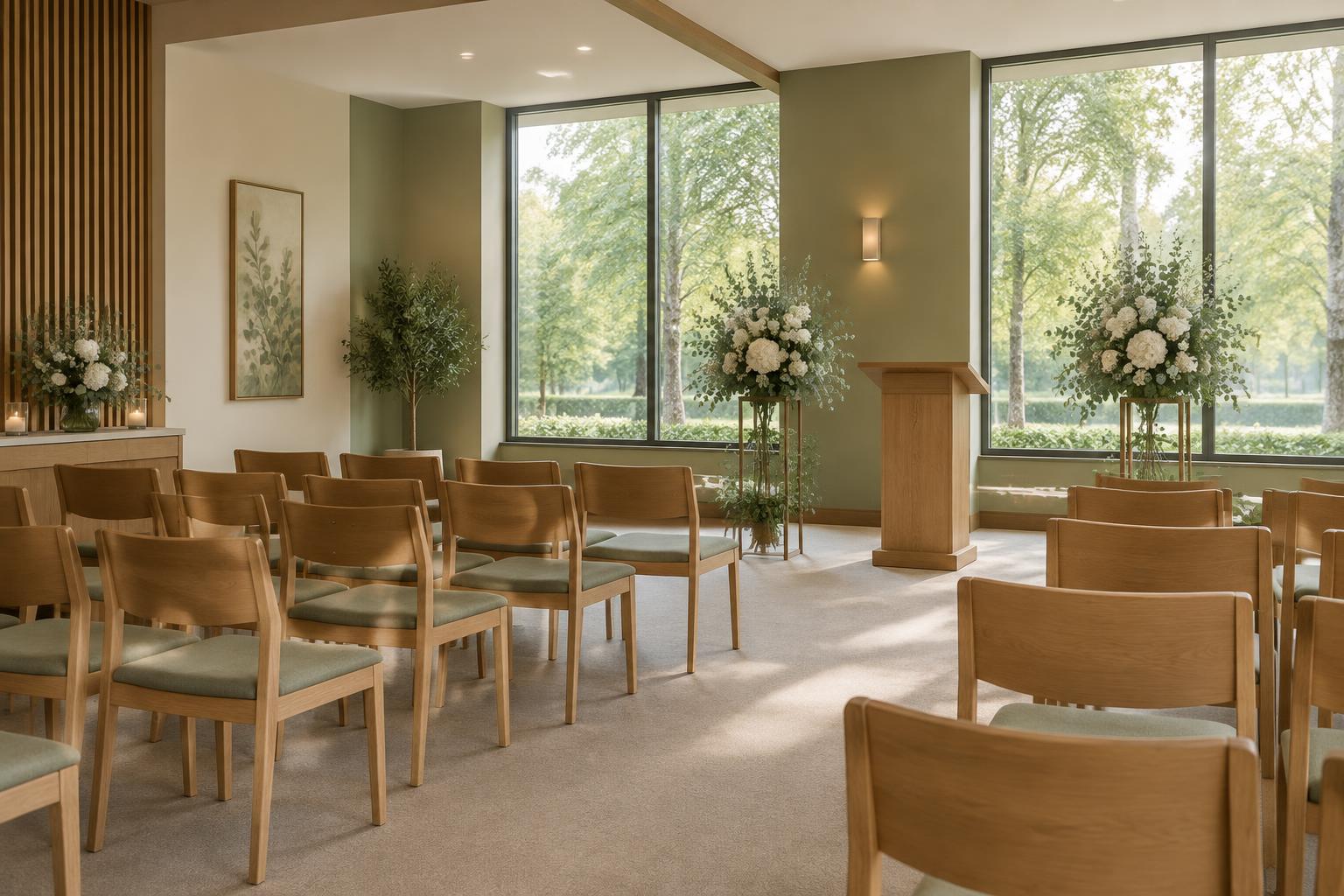
A little understanding can make the unknown feel gentler
If you have never attended a celebrant-led funeral, you may be wondering what will happen, what you will be asked to do, or whether the ceremony will feel right for your loved one. You do not need to know the answers before we speak. My role is to care for your family, listen to what matters and help shape a farewell that feels truthful to the person you love.
I am Jodie Birch, an independent celebrant in County Durham. A celebrant-led funeral is a personal ceremony built around someone’s life, relationships, wishes and beliefs. It can be non-religious or, by agreement, include a prayer, hymn or spiritual reading. It is not the same as a service led by a faith minister; if particular religious rites matter to you, discuss them with the appropriate faith leader and your funeral director.
The steps below are a guide, not a fixed script. A crematorium ceremony, a burial and a memorial held later can have different arrangements. We agree the order with your family, funeral director and venue, so there are fewer unfamiliar things to carry on the day.
Step 1 · Choosing your celebrant and confirming arrangements
Your funeral director may introduce a celebrant, or you can ask to work with someone you have chosen yourself. If you would like me to care for your family, you or your funeral director can get in touch to discuss availability and what you need. We confirm the ceremony date, venue and time before making firm arrangements.
The funeral director usually coordinates care of the person who has died, transport, the coffin and the practical burial or cremation arrangements. My part is the ceremony: listening, shaping the words and leading the farewell. Knowing who is looking after each part can help you avoid having to repeat questions.
Ask about the available ceremony time, accessibility, fees and what is included. Venues have different booking lengths and facilities; there is no single duration that applies to every celebrant-led funeral.
Step 2 · A conversation about the person you love
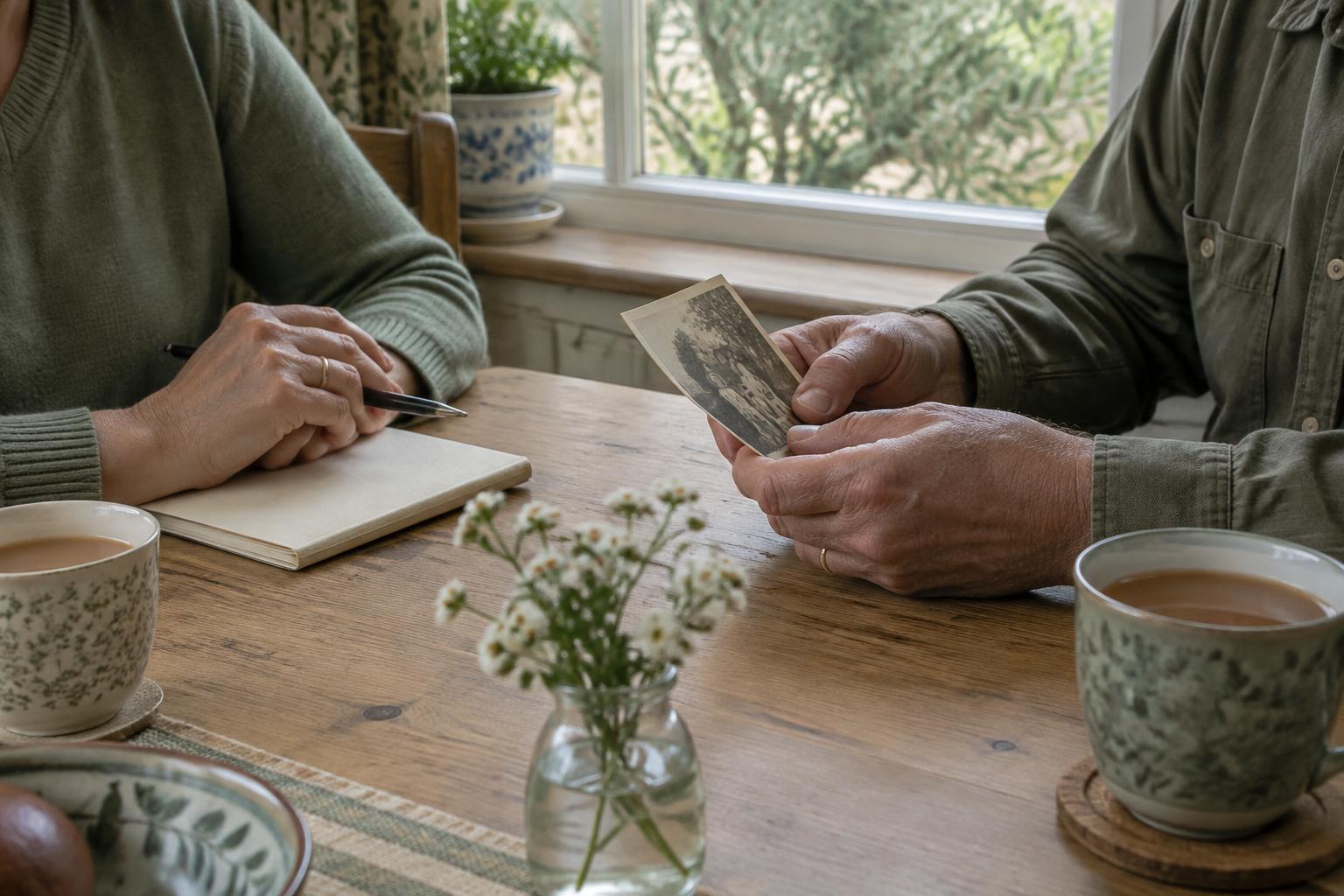
We arrange a conversation in a way that works for your family. You can bring someone with you and share notes, photographs or memories if you wish. There is no test, no need to tell a life in perfect order, and no expectation that you will remember everything at once.
I listen for the person within the details: the way they spoke, the things they enjoyed, the people they cared about, the ordinary habits that made them themselves. Sadness, warmth and gentle humour can sit together, if that feels right for your family.
We also talk about their wishes, beliefs, any complicated relationships and anything you would rather keep private. You do not have to turn a difficult story into a perfect one. Tell me what may be shared and what must stay out of the ceremony.
Step 3 · Choosing the words, music and people involved
Together, we consider a tribute or eulogy, music, readings and any family contributions. A favourite song or one small memory can be enough; there is no obligation to fill the ceremony with lots of different elements.
A relative or friend may want to speak, or may prefer me to read their words. We agree this beforehand and plan what happens if they become upset or change their mind. Nobody has to speak publicly to show how much they love someone.
If children are attending, we can discuss a simple explanation of what they may see and hear, a trusted adult who can step outside with them, and optional ways to contribute. A drawing or a memory can be included without asking a child to stand at the front. Check music, photo tributes, livestreaming and recording options with the venue; facilities, permissions and additional fees vary.
Step 4 · Checking the tribute and the running order
Before the day, we agree the ceremony’s shape and check the personal words. This is the time to correct a name, clarify a story, check pronunciation or remove something that no longer feels right. We agree when changes need to be finalised so the ceremony can be prepared within the venue’s timing.
A possible order is entrance music, a welcome, a tribute, readings or family contributions, a quiet moment with music, the farewell or committal, and closing words with exit music. Readings can sit within the tribute, and a burial may have a separate graveside farewell. Your ceremony does not have to follow this exact sequence.
Let us know about mobility, hearing, communication or sensory needs as early as you can. Your funeral director and venue can confirm accessible entrances, seating, hearing support and other available arrangements. You are allowed to ask practical questions; they matter too.
Step 5 · Arriving and being welcomed
Your funeral director will explain where to arrive, when to be there and how the family and coffin will enter. Sometimes the coffin is already in place; sometimes people follow it into the ceremony. There is no need to guess which arrangement applies to your service.
Guests usually take their seats while entrance music plays. I begin with a welcome, acknowledge why we are gathered and gently introduce the ceremony. Where standing or sitting is part of the agreed service, you will be guided; anyone who needs to remain seated can do so.
You do not need to hold yourself together for everyone else. Tears, quietness, a pause or stepping outside with someone you trust are all understandable. We can discuss those worries before the day.
Step 6 · The tribute, readings and a moment to remember

The tribute is often the heart of the ceremony. It tells something of the person’s life, but it is not a list of every date or achievement. The small details can help those listening recognise someone they knew and loved.
Readings, poems, prayers or contributions from family and friends can be woven around that story. I guide the transitions so nobody has to work out when to stand or begin. If a speaker needs a pause or would like me to continue, we use the plan we have agreed together.
A piece of music or quiet reflection can give people time to remember privately. There is no required feeling during that moment. You may think of a memory, listen to the song or simply sit beside the people who are there with you.
Step 7 · The farewell or committal
‘Committal’ is the word often used for the formal farewell connected with burial or cremation. I explain this part beforehand, because not knowing what will happen to the coffin can be a real worry for a family.
At a crematorium, arrangements may include curtains closing around the coffin, or leaving them open where the venue permits. The details vary, so your funeral director and the crematorium must confirm the options. Closing the curtains marks the ceremonial farewell; it does not mean the cremation happens in front of the congregation or necessarily at that moment.
For a burial, the committal may happen at the graveside, with the coffin lowered as part of the agreed arrangements. We discuss the words, where people will stand and any permitted gestures, such as placing a flower. A memorial held without the coffin may instead have a closing reflection, rather than a burial or cremation committal.
Step 8 · Closing the ceremony and what happens afterwards
The ceremony closes with a few words to thank those who have come, and any agreed information about donations or a gathering afterwards. Exit music may play while people leave. Your funeral director guides the practical next steps, including any journey to the burial place.
You do not have to greet every guest or attend a gathering if it feels too much. A trusted person can share the arrangements or help you find a quiet moment. For cremation, ask your funeral director when and how the ashes will be available; they are not usually handed to the family immediately after the service.
Support does not have to stop when the ceremony ends. Our Helpful Links & Support page brings together practical information and bereavement services, so you do not have to search for everything alone. My role is ceremony care and personal writing, not bereavement counselling; specialist support can sit alongside what I offer.
A few things you might want to ask before the day
How much ceremony time is booked, and does that include entering and leaving? Who will check the music and any photographs? Can the family see the tribute before the ceremony? Who can help if someone no longer feels able to read? What exactly will happen during the farewell?
You may also want to ask about accessible seating, children attending, a livestream for someone who cannot travel, and which fees are included or charged separately. You do not need to ask all of these at once. Begin with the question that is worrying you most.
If you would like to lead a family funeral yourself, we can discuss writing support from a distance and the words you need. The funeral director and venue still need to confirm the practical arrangements and any requirements. You can ask for help without handing over the whole ceremony.
You do not have to find all the words yourself
Whether you are arranging a funeral in County Durham or the surrounding North East, you are welcome to begin with a conversation. We can talk about where the ceremony is taking place, what matters to your family and whether I am available to care for you.
There is no need to arrive with a finished tribute or a list of perfect choices. You bring the person you love in the memories you have; I listen and help carry the words.
A conversation, with care
Share a thought or a question. Messages are reviewed before appearing publicly; please keep personal details private. For individual support, contact Jodie directly.
Loading conversations…