
By Jodie Birch · Independent celebrant · 14 November 2026
When is Children’s Grief Awareness Week in 2026?
Children’s Grief Awareness Week runs from Monday 16 to Sunday 22 November 2026 in the UK. This year’s theme is #KeepingConnected: helping bereaved children and young people feel connected to their friends, family, grief traditions and memories. The Childhood Bereavement Network brings together the campaign and its resources.
It is a week to notice the children who are missing someone important, and the people around them who may be wondering how to help. That person might be a parent, sibling, grandparent, friend or someone else they love. The support they need does not finish when the week ends.
You do not need to find perfect words
When I care for a family through a funeral ceremony, I want the words to make room for the people who will hear them. That includes the youngest people in the room. A child’s memories matter too, even when they are small, unfinished or difficult to put into sentences.
This is gentle guidance for parents, carers and other adults, not counselling or a substitute for specialist support. I am an independent celebrant based in County Durham; my role is to care for your family and help with the ceremony and tribute. The charities linked below can help with questions about a child’s bereavement.
How to support a grieving child: begin by listening
Let the child guide the conversation. You might offer, ‘Would you like to talk about them, or shall we sit together for a little while?’ They do not have to answer straight away. Listening can mean making space without asking them to explain everything they feel.
Child Bereavement UK shares advice from widowed parents about keeping communication open, adapting to children’s needs as they grow and being led by the child. You do not need to get every conversation right. If you are unsure what to say or how to answer a difficult question, ask a specialist bereavement service for guidance rather than feeling you must manage alone.
Keep a small connection to the person they miss

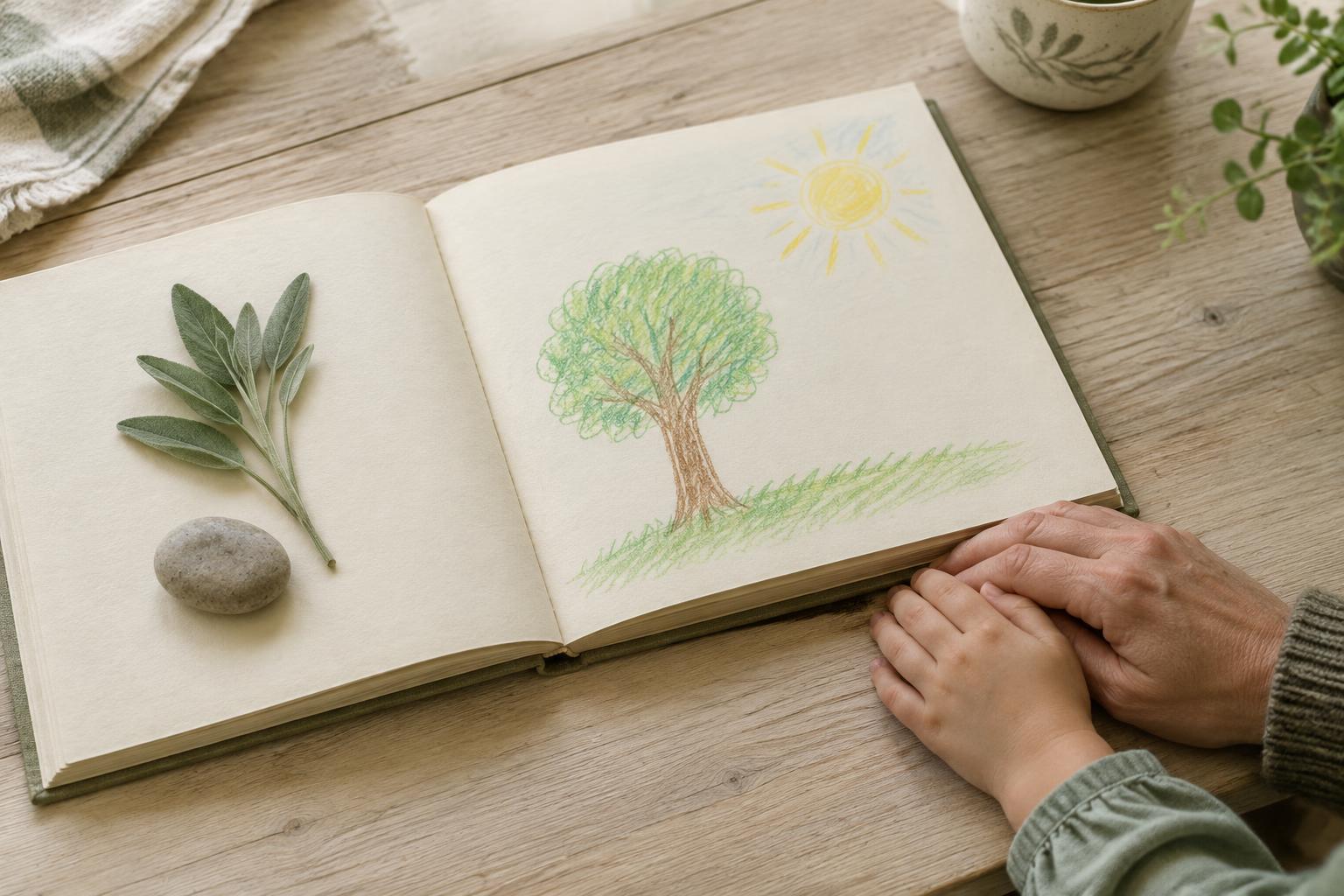
An ordinary memory can be enough: the song they sang in the car, a favourite recipe, a photograph or a phrase that always made everyone smile. You could invite a child to draw something they remember, choose a picture for a memory book or tell you a story to write down. Offer, rather than insist.
There is no need to turn remembering into a task. A scrapbook can stay unfinished. A photograph can be put away and brought out another day. Let the child decide what feels comfortable, and make room for different preferences within the same family.
Finding clear words to explain a death
Child Bereavement UK advises using simple, honest words such as ‘died’ rather than ‘gone to sleep’ or ‘lost’, which can confuse a young child. Give information in small pieces, answer the question they have asked and let them return with more questions. It is all right to say you do not know an answer.
A story can help open a conversation, but it should sit alongside a clear explanation of what has happened. You can share your family’s beliefs while helping the child understand that death is different from sleeping or going away. If the circumstances are difficult to explain, the charity can help you find words appropriate to the child’s understanding.
Books to explore together, not a reading list to complete
I would begin with one book, read it yourself first, and offer to share it without expecting a conversation afterwards. These titles appear in Child Bereavement UK’s resources for children up to 11. Its list is not an endorsement: whether a book helps depends on the individual child. Check the language, beliefs and circumstances against your family’s needs rather than relying on an age label alone.
Badger’s Parting Gifts — Susan Varley. Badger’s friends remember the things he taught them after his death. This can offer a starting point for talking about memories. The anniversary edition includes a reading guide developed with Child Bereavement UK; the charity also shares accompanying guidance online.
Always and Forever — Alan Durant. After Fox dies, his friends gradually find comfort in remembering him. It offers a story to share when you want to make room for memories, without suggesting that a child has to feel better by a particular time.
A Shelter for Sadness — Anne Booth. A boy makes a place where his sadness is welcome. This picture book may help begin a conversation about making room for feelings; it is not, by itself, an explanation of death.
Ask your library about borrowing a copy, or ask a local bookseller about availability. There is no need to buy several books. Stop or put a book aside if the child does not want to continue, and seek specialist guidance if you are unsure what would be suitable.
Stories, support cards and a small activity to try
The official awareness-week hub introduces Pudsey and the Thread of Hope, based on Tom Fletcher’s original story, alongside the #KeepingConnected campaign. Visit the hub for its current resources rather than assuming every child will connect with the same story.
The grief support cards were developed by young people, for young people. An older child or young person may prefer choosing a card that describes what they need to saying it aloud. Offer the cards as an option, not a test of how well they can explain their grief.
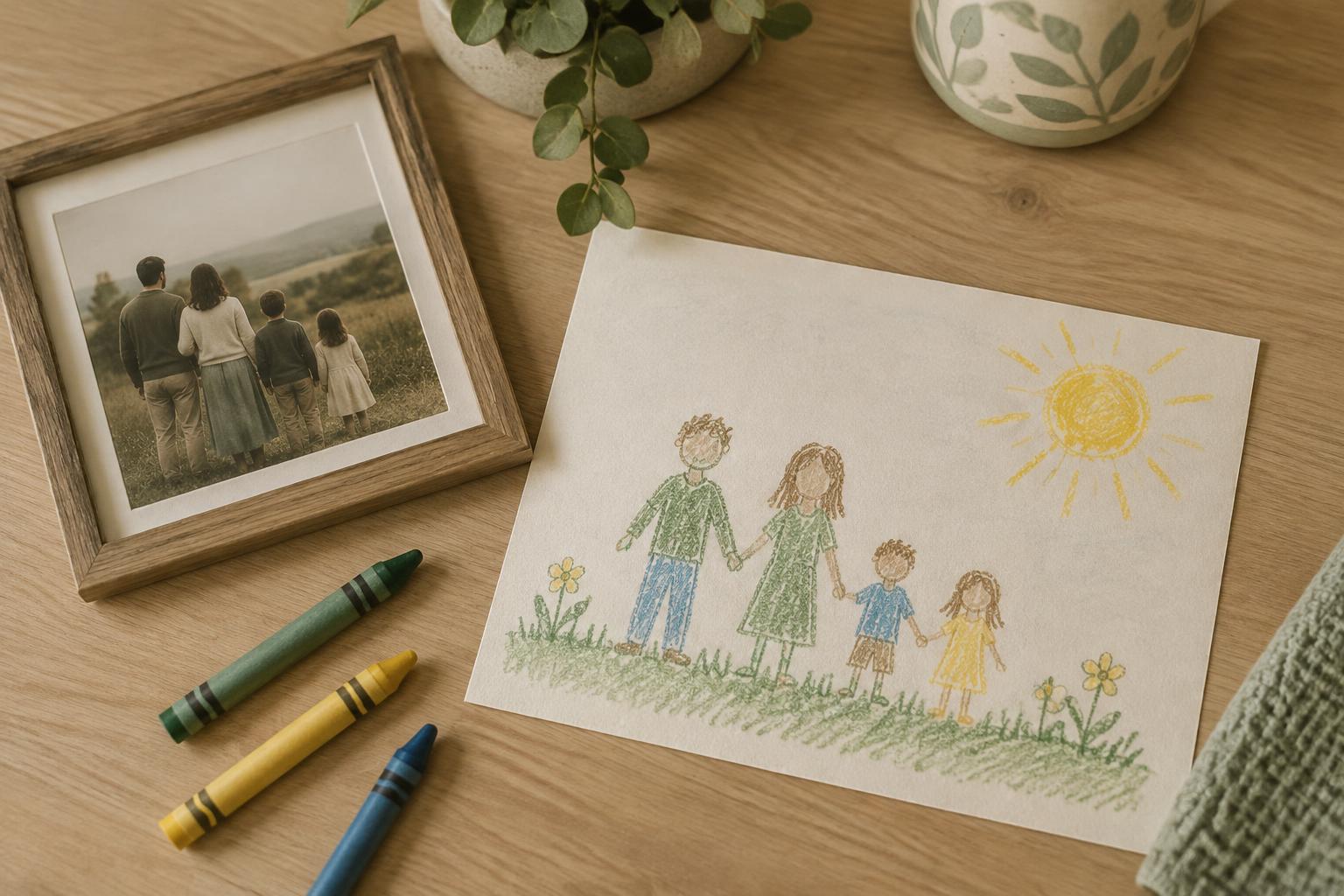
For a simple memory activity, invite the child to choose one photograph or draw one memory, then ask whether they would like you to write their words beside it. They can choose where it is kept and whether anyone else sees it. You do not need special materials, and doing nothing today is also a valid choice.
Closer to home, Sedgefield author James Smith has published his first children’s book, Beyond the Stars, while living with metastatic oesophageal cancer, also described as advanced or stage 4 cancer. The book is a space adventure he shares with his daughter, Ida, not a bereavement guide. His story is a reminder of the love, creativity and everyday joy that sharing a book can bring to family life.
If the child is grieving a parent, sibling or grandparent, the specialist pages below offer more focused guidance. These are public charity resources and stories, not accounts from families I have cared for.
- Beyond the Stars: read Jodie’s reflection on James’s story and preserving family memories
- Read James’s story in The Northern Echo: a Sedgefield dad and his first children’s book
- Official campaign stories and resources: Pudsey and the Thread of Hope
- Download the young people’s grief support cards (PDF)
- When a parent dies: support for the surviving parent or carer
- When a sibling dies: caring for the other children in the family
- When a grandparent dies: information for families
Let them belong without asking them to perform
If a child would like to contribute to a funeral or memorial, we can discuss a small, personal way for their words to be included. They might share a memory with me beforehand or choose a reading for an adult to say. Standing at the front is not the only way to be part of a goodbye.
No child needs to speak to show how much they love someone. Talk through any involvement with their parent or carer, your funeral director and the celebrant, and seek specialist advice if you are unsure about attendance or preparation. My part is to make the ceremony’s words considerate of your family, not to decide what is right for an individual child.
Connection beyond the ceremony
The Childhood Bereavement Network’s campaign includes grief support cards developed by young people, for young people. They offer a way to show friends and family how support might feel helpful. The official hub also introduces ‘Pudsey and the Thread of Hope’, created with BBC Children in Need, and resources for the week.
For a family in County Durham or elsewhere in the North East, the national charities below are a starting point. Ask them about suitable support for your child and any options near you. If school is part of your child’s life, you could also discuss with a trusted member of staff what the child wants others to know and who they can turn to during the day.
Where to find children’s bereavement support
Child Bereavement UK supports families when a child grieves and when a baby or child dies. Its helpline is 0800 02 888 40; the charity’s own website also offers email and live-chat information. Check its current availability before calling. The helpline is not an emergency service.
Winston’s Wish is now part of Child Bereavement UK; its website directs families to the unified charity for current information and support. The Childhood Bereavement Network brings together resources and information about childhood bereavement. Direct links are below, alongside my Helpful links & support page for wider practical help.
If you are concerned about a child’s wellbeing, contact their GP or an appropriate specialist service. If someone is in immediate danger, call 999. Asking for more help is a way of caring, not a sign that you have failed.
A little care, carried forward
This awareness week is a beginning, not a deadline. You might choose one small thing: offer a memory, ask what would help, or save a support link for another day. There is no need to do it all.
If your family is arranging a funeral or memorial and you would like help with the words, you are welcome to talk to me. We can consider how the tribute acknowledges your loved one and the children who love them, gently and without putting anyone under pressure.
A conversation, with care
Share a thought or a question. Messages are reviewed before appearing publicly; please keep personal details private. For individual support, contact Jodie directly.
Loading conversations…